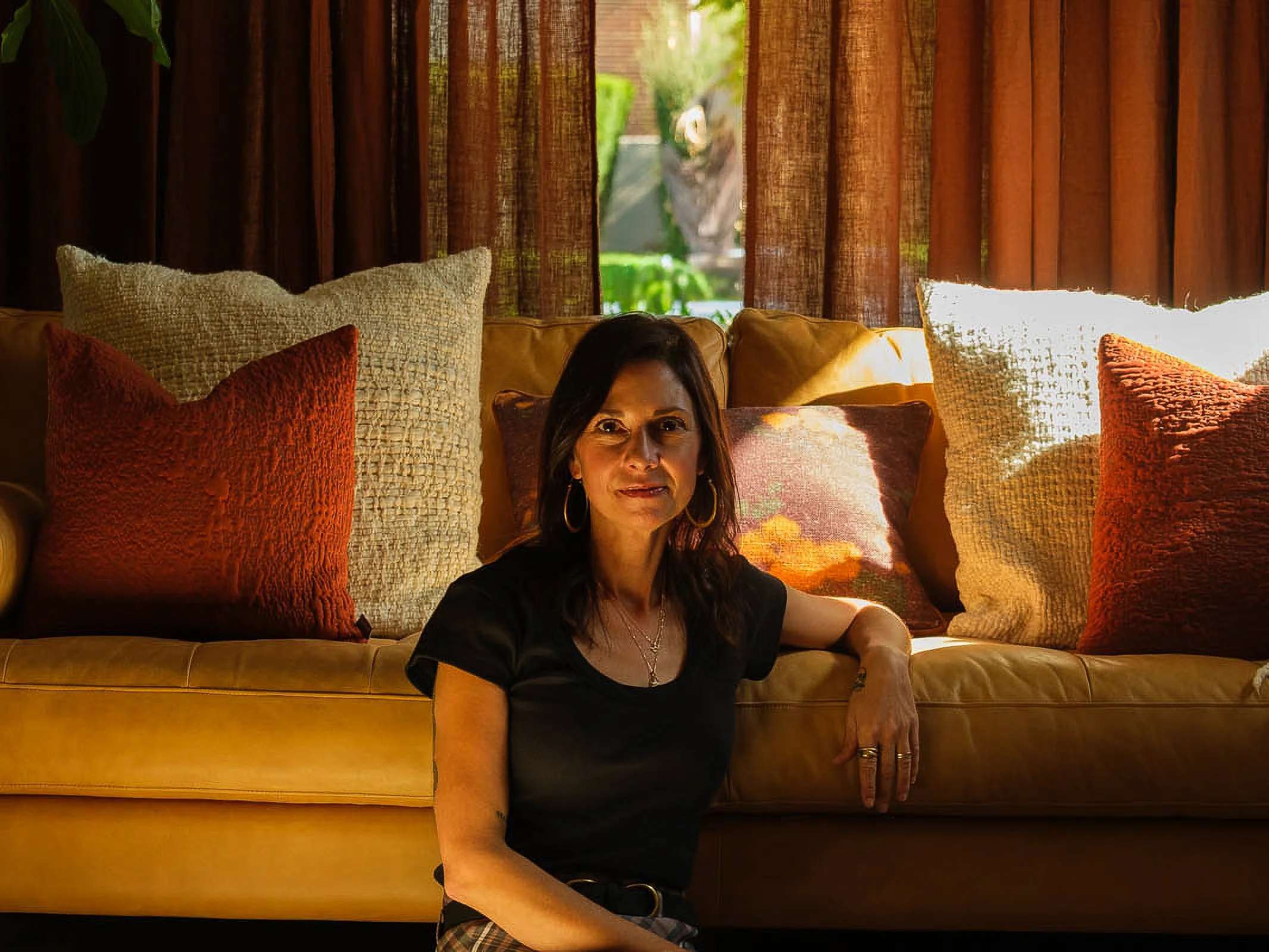
The Details That Make a Home Feel “Finished” And Why Your Brain Notices Them
It really is true that the devil is in the details.
There’s a delicate balance in design: making sure the details stand out just enough, but still blend seamlessly with the rest of your home. This is what we specialize in at Curated Style Collective. It is a true passion of ours.
When that balance is right, something shifts. The space feels complete. Settled. Intentional. You may not consciously notice why. But your brain does.
A home that feels “finished” isn’t about more stuff. It’s about thoughtful cohesion, the quiet alignment of materials, lighting, scale, texture, and proportion. These micro-decisions shape how your nervous system responds to a space. Research in environmental psychology and neuroscience suggests that our surroundings directly affect mood, cognitive clarity, and stress levels.
Let’s talk about the subtle details that bring a design full circle, and why they matter more than you think.
1) Layered Lighting (Not Just the Big Light)
Overhead lighting alone creates harsh shadows and visual flatness. Studies show that lighting temperature and intensity influence alertness, mood, and even circadian rhythms.
A finished room includes:
Ambient lighting (soft general glow)
Task lighting (functional focus)
Accent lighting (depth and dimension)
When light is layered, a space feels warm and dimensional. Without it, even beautiful furnishings can feel incomplete.
(And yes- this is your sign to turn off the overhead light. Or add a dimmer switch!)
2) Cohesive Material Language
Your brain constantly scans for patterns. When materials feel disconnected- too many wood tones, competing metals, or unrelated textures, it can create subtle cognitive friction.
But when finishes are thoughtfully repeated throughout a home- brass repeated in hardware and lighting, wood tones carried from room to room- the brain registers harmony.
Harmony lowers cognitive load. Lower cognitive load feels like calm.
3) Intentional Transitions Between Spaces
Open floor plans are common, but without intentional transitions, spaces can feel undefined.
Small details can help create flow:
A change in rug texture
A ceiling treatment
Consistent trim or casing profiles
Repeated architectural lines
Research on spatial legibility shows that environments that are easy to “read” reduce mental fatigue. When your eye understands where one space ends and another begins, your nervous system relaxes.
4) Proper Scale and Proportion
An oversized sofa in a small room, or tiny art floating on a large wall, creates visual tension. Often, people can’t articulate why something feels off. But proportion matters deeply. Studies in aesthetics show that humans respond positively to balanced scale and symmetry.
When scale is right:
Furniture breathes
Pathways feel natural
The room feels grounded
It’s subtle, but extremely powerful.
5) Textural Depth
Flat rooms feel unfinished. Layered rooms feel alive.
Soft textiles, natural woods, stone, and woven fiber textures create sensory richness. Research suggests that tactile and visual textures influence emotional comfort and perceived warmth in a space.
This is why:
A linen drape softens a window
A wool rug grounds a room
A velvet pillow invites you to sit down
Texture is not decoration. It’s emotional architecture. A way to provide love and intrigue in a room that then invites you to enjoy and stay a while.
6) The Quiet Repetition of Detail
One of the most overlooked finishing touches is repetition.
A curve repeated in:
An arched mirror
Rounded dining chairs
A curved sofa arm
Or a subtle black accent echoed in hardware, window frames, and lighting.
The brain loves repetition! It signals cohesion and intentionality. Without it, rooms can feel pieced together instead of thoughtfully composed.
7) Visual Rest
Not every wall needs art. Not every surface needs décor.
White space (also known as a visual pause) allows the eye to rest. Research in cognitive science suggests that environments with reduced visual clutter improve focus and reduce stress. A finished home isn’t filled to the edges. It breathes.
Why This Matters
Well-designed spaces aren’t just beautiful. They regulate us. Environmental psychology research shows that built environments influence:
Cortisol levels
Mood and emotional regulation
Cognitive performance
When the details align, your brain doesn’t have to work as hard. The room feels effortless, even if an incredible amount of intention went into creating it. That’s the difference between a house that looks styled and a home that feels complete. And often, the details you barely notice are the ones doing the most work.
If your space feels almost there, but not quite finished, it’s rarely about needing more.
It’s about refinement.
It’s about editing.
It’s about thoughtful cohesion.
And it’s about designing a home that quietly supports your nervous system every single day.
Next Steps
Connect with us at Curated Style Collective to see how we can help. From Home Edits, House Call: Designer Day, or Full Service Design, we are here for you to bring your project alive and to the next level. Check out our full range of services and what they entail!
About the Author
Rachel McClelland is a designer at Curated Style Collective and founder of Rachel McClelland Design Studio. With a background in interior design and psychology, she collaborates closely with clients and creative partners to create cohesive, wellness-focused homes that feel calm, refined, and deeply personal. Serving clients in Salt Lake City, Park City, and nationwide.
Note: This article is educational and design-focused. It is not medical advice, and it’s not a substitute for professional healthcare guidance.
References
Ulrich, R. S. (1984). View through a window may influence recovery from surgery. Science, 224(4647), 420–421.
Kaplan, S. (1995). The restorative benefits of nature: Toward an integrative framework. Journal of Environmental Psychology, 15(3), 169–182.
Cajochen, C. (2007). Alerting effects of light. Sleep Medicine Reviews, 11(6), 453–464.
Biederman, I. (1987). Recognition-by-components theory. Psychological Review, 94(2), 115–147.
Lynch, K. (1960). The Image of the City. MIT Press.
Palmer, S. E., Schloss, K. B., & Sammartino, J. (2013). Visual aesthetics and human preference. Annual Review of Psychology, 64, 77–107.
Jansson-Boyd, C. V. (2011). Touch matters: Exploring the relationship between consumption and tactile interaction. Social Semiotics, 21(2), 183–195.
Ramachandran, V. S., & Hirstein, W. (1999). The science of art: A neurological theory of aesthetic experience.Journal of Consciousness Studies, 6(6–7), 15–51.
McMains, S., & Kastner, S. (2011). Interactions of top-down and bottom-up mechanisms in human visual cortex.Journal of Neuroscience, 31(2), 587–597.
Evans, G. W., & McCoy, J. M. (1998). When buildings don’t work: The role of architecture in human health.Journal of Environmental Psychology, 18(1), 85–94.